- Call Us: 011 4652 8024
- Email: info@pushpanjalihospitals.com


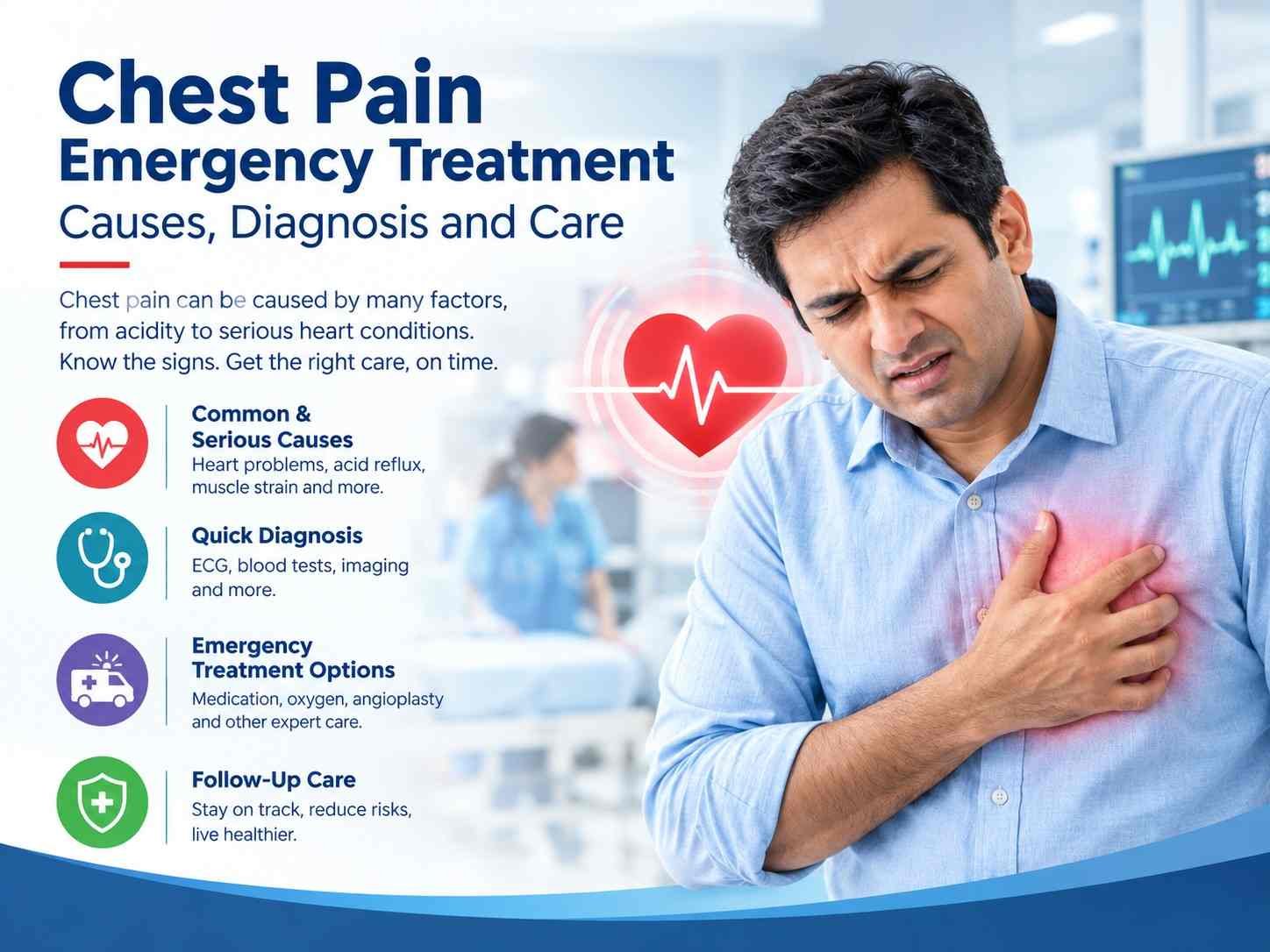
It is quite common to have chest pain owing to various causes, be it acidity or muscle pain or severe heart diseases. It is important to know when you should visit a doctor in order to protect yourself. Chest pain emergency treatment consists of visiting a doctor for examination and diagnosis, followed by treatment depending on the cause of the symptoms. Patients are offered an opportunity to get a medical examination in case of emergency at Pushpanjali Hospitals. Doctors can recommend carrying out certain diagnostic examinations, like ECGs and blood tests, in order to check up on your heart. It is important to know the symptoms of emergencies like chest pains, breathlessness, sweats, or pains that spread to the arm and the jaw area.
All pains need an ambulance. Some definitely do. In India, dial 112 immediately if you find:
Pain in your chest, whether pressure, squeezing, or fullness, and persists for a while
Pain that radiates to your arm, jaw, neck, or back
Difficulty breathing, breaking out in cold sweats, nausea, or fainting
Don't attempt to reach the hospital yourself. The American Heart Association recommends that people call for help from emergency services. Why? This will allow the paramedics to begin treatment en route.
Symptoms may vary according to gender as well. Women tend to experience more nausea, fatigue, or backache than the typical crushing pain. According to the World Health Organization, cardiovascular diseases top the list of global causes of death.
There are two major categories for causes of chest pain.
Cardiac chest pain occurs when there is reduced blood supply to the heart muscles or inflammation of the heart muscles. Examples include heart attack, angina, myocarditis, and pericarditis. Rupture of the aorta, known as aortic dissection, is less common but equally critical.
Non-cardiac chest pain originates from other body parts or tissues. Some cases are acid reflux, muscle strain, inflammation of the ribs' cartilage, pneumonia, shingles, and panic attacks. Another example is a blood clot in the lung, known as pulmonary embolism.
And that is where the catch lies. One cannot distinguish between them based on the sensation alone. Your heart is not good at categorising what it is complaining about. Hence, all of those sudden chest pains should always be investigated.
Time becomes more important than the paperwork in a hospital for the treatment of chest pain emergencies. In Pushpanjali Hospital, as in any other 24 hour emergency hospital in Delhi, you may expect the following procedure:
Triage: A nurse takes your vital signs and symptoms immediately.
Electrocardiogram (ECG): According to the guidelines of the AHA and ACC, it should be performed within 10 minutes of your arrival at the hospital.
Blood tests: The troponin test determines damage to the heart muscle.
Imaging: Chest X-rays determine the lungs and the heart size and structures around them.
The starting point in diagnosing chest pain is to ask: "What can hurt this patient most rapidly?" It is called the differential diagnosis of chest pain. The worst causes should be first eliminated; for example, myocardial infarction, pulmonary embolism and aortic dissection. Less dangerous causes follow after.
Chest pain emergency medicine algorithms place first importance on ECG and troponin. The outcomes determine the subsequent action. Further tests include the use of echocardiography, CT scanning, and exercise testing. Each test provides information about a particular aspect and together help determine whether the pain is cardiac or non-cardiac in origin.
Rapidity is important at this point. Quick sorting will make the emergency treatment more effective and safe.
The choice of therapy depends on the aetiology. In cases of emergency medical care for chest pain, the following treatments may be applied:
Aspirin, unless you are allergic to it and a physician has prohibited it
Nitroglycerin – for alleviating angina
Oxygen – in case of hypoxia
Analgesics and anticoagulants
Angioplasty or thrombolytic medication – in case of acute myocardial infarction
In cases of acute myocardial infarction, the recommended standard of the American Heart Association/American College of Cardiology is reopening of the occluded coronary artery within 90 minutes after admission.
Different treatment strategies apply to non-cardiac origins. Acid-suppressive medications are used for relieving reflux, antibiotics for pneumonia and anticoagulation for pulmonary embolism.
Chest pain emergency medicine specialists are responsible for this initial stage of care. They stabilise the patient first and then introduce cardiologists or other specialists. This is the essence of chest pain emergency treatment: stabilise, diagnose, and treat.
Discharge from the hospital is not the end goal; follow-up after your emergency treatment decreases your chances of having another episode.
Emergency treatment for chest pain at hospitals may entail ICU monitoring, particularly when you suffer a heart attack. An adequately staffed ICU hospital monitors heart rate and blood pressure carefully.
These steps should be taken after discharge:
Take all medications as directed by your doctor
Attend all follow-up visits
Participate in a cardiac rehabilitation program if advised by your doctor because it
involves exercise and education
Maintain your blood pressure, cholesterol, and blood glucose level under control
Avoid smoking, as nicotine does not go well with heart arteries
Our doctors at Pushpanjali Hospital can develop a plan according to your situation and lifestyle.
When chest pain appears suddenly and is accompanied by difficulty breathing, sweating, dizziness, or other alarming symptoms, it must not be ignored. Assessment at an early stage would help doctors determine if there are any dangerous cases present and initiate treatment accordingly. For emergencies, dial emergency medical services without delay and do not wait for appointments.