- Call Us: 011 4652 8024
- Email: info@pushpanjalihospitals.com


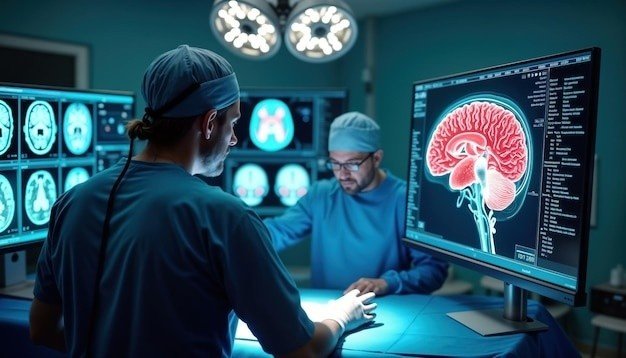
Brain diseases may lead to difficulties with movement, memory, speech, vision, coordination, and day-to-day independence. In the event that the symptoms persist or are associated with a structural brain abnormality, prompt diagnosis is essential. For people seeking Best neurosurgeon in Delhi, it is important to consider not only the experience of the doctor but also the quality of diagnostics, emergency assistance, surgeries, and post-op care.
Neurosurgery treatments at Pushpanjali Hospital involve evaluation and management of complex brain, spine, and nervous system disorders. According to the hospital, their neurosurgery services consist of neurosurgeons, MRI & CT facilities, state-of-the-art operation theatres, Neuro ICU, and rehab facilities.
There are many types of brain disorders. They may arise due to abnormalities in tissue growth, vascular issues, trauma, infections, seizures, or any changes in the brain and its nervous system.
According to the World Health Organization, neurological disorders can affect the brain’s structural or functional aspects and therefore need to be treated, cared for, and rehabilitated.
Examples of brain disorders that might need neurosurgery evaluation include:
Brain tumors
Brain hemorrhage
Specific consequences of a stroke
Hydrocephalus
Injuries to the head and brain
Specific cases of seizures
Brain and spinal cord disorders
Specific nerve and spine disorders
Not every brain disorder necessarily needs surgical intervention. This is an essential point to understand. An accountable Neurosurgeon should first determine whether the patient needs observation, medications, rehabilitation, or surgery.
Call us immediately to book a consultation session with our expert neurosurgery team.
Some neurological symptoms need immediate medical attention, especially if they are recent, severe, and worsening.
Based on the underlying disease, some warning signs may consist of headaches and seizures; changes in vision and speech; weakness; balance problems; changes in memory and behaviour; and symptoms after head injuries. The brain tumour symptoms, for instance, depend on the location of the tumour and may involve headaches, seizures, nausea, vision issues, and changes in cognition and behaviour.
Severe and sudden headache, first-time seizures, loss of consciousness, and severe neurological symptoms after head injury should be considered a matter of urgency and not a “wait-and-watch” situation.
In cases of emergencies, one can turn to a 24 hour Emergency Hospital in Delhi, which will be an important first step in getting medical help. As per Pushpanjali Hospital, they offer 24-hour emergency services with 24×7 ICU and surgery facilities.
There is no one-size-fits-all solution to treating all brain diseases. The method used depends on the disease in question, the severity, its location, symptoms, and the overall state of health of the individual.
Where there are brain tumours, surgery, radiotherapy, chemotherapy, medications, or combinations thereof are some of the solutions available. According to NHS guidelines, the treatment will be determined by a number of things such as the type, size, nature, spread of the tumour, and the overall health of the patient.
Where it is a Brain Surgery Specialist who treats a certain case, he or she will undertake surgery where it provides some significant benefits from a health perspective. Surgery can also be done for the removal of the affected tissues, to facilitate diagnosis, to relieve pressure, and to solve a fluid problem.
The exact treatment should always come from the treating medical team after examination and appropriate investigations.
Good Neurosurgical Treatment starts with establishing the facts of the matter.
On the basis of presenting symptoms, your doctor may advise neurological examination and neuro-imaging like CT or MRI. For cases of brain tumours, special teams may employ imaging and, if needed, biopsy or surgical intervention for confirming the diagnosis.
It is at this point that reasoning triumphs over intuition. It is not true that every headache patient has a brain tumour, just as an abnormal imaging test result does not always call for surgery.
Why Pushpanjali Hospital Stands Out for Neurosurgical Care
The Pushpanjali Hospital offers neurosurgery services that entail diagnosis and treatment of brain and spine-related diseases with the help of expert physicians, modern diagnostic tools, operation theatres, Neuro ICU support, minimally invasive treatments where necessary, and rehabilitation.
The more extensive services related to neuroscience offered by Pushpanjali Hospital include diagnosis and treatment of brain tumors, epilepsy, selected headache and movement disorders, spinal injury, and spinal cord injuries.
It is significant because complicated neurological diseases might need more than one department, and imaging, anaesthesia, critical care, rehabilitation, and specialist consultation can all play a role in patients’ treatment process.
Patients searching online for the Best neurosurgeon in Delhi can also verify the hospital's location and available services through its official online presence and Google Business Profile.
Neurologists and neurosurgeons both manage neurological conditions, but their roles can differ.
The two specialities complement each other and do not compete. There is a reason why the treatment of the brain and spine goes hand-in-hand for some patients.
Some neurological issues need urgent care, such as stroke symptoms, severe head injury, brain haemorrhages, seizures, or sudden neurological changes.
It is easier to give an efficient and well-organised initial treatment if there is a hospital with emergency care and imaging available. According to Pushpanjali Hospital, their emergency department provides 24-hour care and includes ICU and surgical care.
If you need guidance on how to get emergency care at the hospital, visit the blog called “Round-the-Clock Emergency Hospitals Near Me: Reliable Hospitals for Emergencies”. Read the emergency hospital guide
Selection of the Best Neurosurgeon in Delhi must not be done based on designation alone. Factors to consider include experience of doctors, diagnostic facilities, emergency facilities, operating theatres, availability of ICU, rehabilitation facilities, and the readiness of the team to educate patients regarding treatment options.
According to Pushpanjali Hospital, their unique approach entails provision of all these services in one healthcare facility.
In the case of Patients requiring Advanced brain disorder management, such an approach can help simplify the entire treatment process.
If either you or a relative is suffering from recurrent neurological complaints, a brain disorder or any injury that requires specialized care, don’t delay in getting a professional opinion.
Contact Pushpanjali Hospital now to talk about your situation and seek expert Neurosurgical Care.